
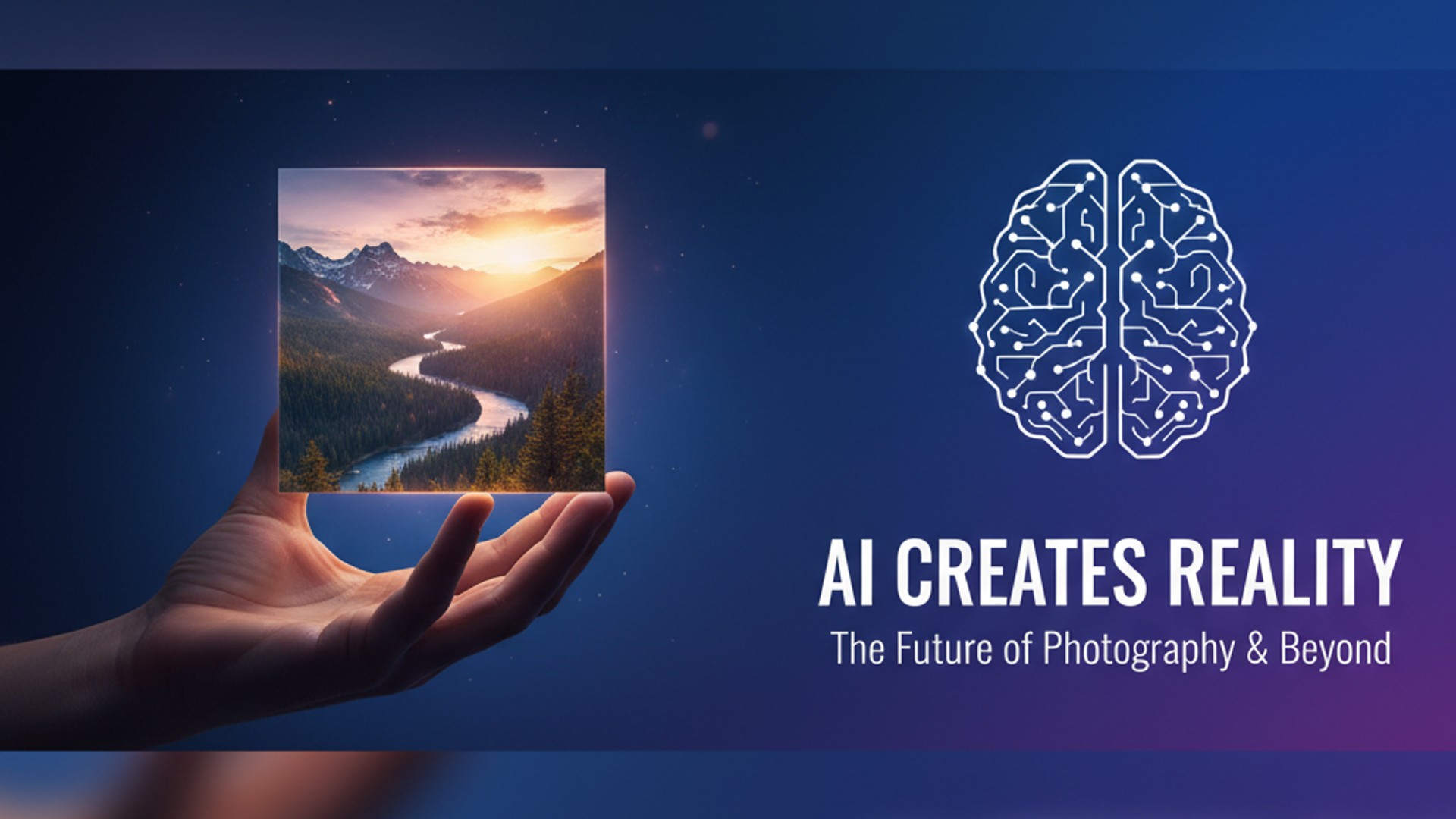
Can AI Create Realistic Photos - Selfyfy Insights
Explore if AI can create realistic photos, how it works, and Selfyfy's role in cutting-edge image generation. Discover the future of AI art!
Can AI Create Realistic Photos - A Deep Dive with Selfyfy
Remember when "AI art" meant blocky, abstract shapes or slightly unsettling, distorted faces? Fast forward to today, and the landscape has dramatically shifted. The question on everyone's minds – from content creators and marketers to photographers and tech enthusiasts – is no longer if AI can generate images, but can AI create realistic photos that are virtually indistinguishable from real-world photography?
The short answer is a resounding yes. AI, particularly through advanced generative models, has not only achieved the capability to produce incredibly lifelike images but is continually pushing the boundaries of photorealism. What was once the exclusive domain of cameras and human artists is now being redefined by algorithms that can conjure landscapes, faces, objects, and entire scenes from mere text prompts or existing images. This isn't just a technical marvel; it's a paradigm shift for how we create, consume, and even perceive visual content.
At Selfyfy, we're at the forefront of this revolution, empowering individuals and businesses to leverage the power of AI for everything from product catalog generation to stunning video creation and hyper-realistic image generation. Join us as we explore the technology behind AI's ability to craft realistic photos, delve into its current applications, and peek into the fascinating future it promises.
The Dawn of Digital Realism - How AI Changed the Game
For decades, computers could render graphics, but the leap to "realistic" was monumental. Early attempts at computer-generated imagery (CGI) often looked artificial, struggling with the nuances of light, texture, and organic forms. The real breakthrough in AI's ability to create realistic photos began with significant advancements in machine learning, particularly with the advent of deep neural networks.
Generative Adversarial Networks (GANs), introduced in 2014, were a game-changer. Imagine two AIs locked in a constant battle: one (the generator) tries to create realistic images, and the other (the discriminator) tries to tell if the image is real or fake. This adversarial process drives both AIs to improve continuously, leading to increasingly convincing results. GANs were responsible for some of the earliest viral examples of AI-generated faces that fooled many.
More recently, Diffusion Models have taken center stage. These models work by taking an image and gradually adding noise until it's pure static. Then, they learn to reverse this process, "denoising" the static back into a coherent, high-quality image. This iterative refinement allows them to generate images with incredible detail, coherence, and photorealism, often surpassing GANs in quality and diversity of output. Companies like Stability AI, with their Stable Diffusion models, and OpenAI, with DALL-E, have popularized these technologies, making them accessible to millions.
This evolution from rudimentary graphics to sophisticated, photorealistic AI has opened up a world of possibilities for creators across every industry.
Yes, AI Can Create Realistic Photos - And It's Getting Better
Let's reconfirm the central query: Can AI create realistic photos? Absolutely. Modern AI systems are proficient at generating images that are virtually indistinguishable from photographs taken with a camera. This capability extends across a wide range of subjects, from human faces and full-body portraits to intricate product shots, breathtaking landscapes, and complex scenes.
Consider the precision AI achieves in generating human faces. Tools available on platforms like Selfyfy, including our advanced AI face generator, can create diverse, unique faces with varying ages, ethnicities, expressions, and even subtle imperfections like pores or stray hairs, all with striking authenticity. These aren't just generic faces; they can evoke genuine human emotion and character.
Beyond faces, AI's prowess extends to:
- Landscapes and Environments: From serene beaches at sunset to bustling cityscapes or fantastical alien worlds, AI can render environmental details with stunning depth, lighting, and textural realism.
- Objects and Products: E-commerce businesses are increasingly using AI to generate high-quality product images, mockups, and lifestyle shots without the need for physical photo shoots. Our product promotion tool at Selfyfy helps businesses create captivating visual content at scale.
- Animals and Creatures: AI can generate realistic images of animals, from domestic pets to exotic wildlife, often capturing their fur, scales, and anatomical features with remarkable accuracy.
- Abstract yet Realistic Scenes: Imagine a concept like "a neon-lit cyberpunk city reflected in a puddle after rain." AI can synthesize these complex, multi-element scenes with a cohesive and believable aesthetic.
The continuous improvement in AI models means that the quality, detail, and contextual understanding of AI-generated photos are constantly advancing. What might have been a tell-tale sign of AI generation a year ago (like distorted hands or strange backgrounds) is rapidly being addressed and refined.
Understanding the Pillars of Photorealism in AI
Achieving such high levels of photorealism isn't accidental; it's the result of several critical components working in harmony:
-
Data Training - The Foundation of Realism:
- AI models learn by consuming vast datasets of real-world images. The quality, diversity, and sheer volume of this data are paramount. A model trained on millions of high-resolution, diverse photographs learns the intricate patterns of light, shadow, texture, and composition that define realism.
- Bias in training data can lead to skewed or stereotypical outputs, highlighting the importance of ethically sourced and diverse datasets.
-
Model Architecture - The Blueprint for Creation:
- As mentioned, GANs and Diffusion Models are the leading architectures. Diffusion models, in particular, excel at capturing fine details and coherent structures by progressively refining an image from noise.
- The complexity and parameters of these models are immense, allowing them to learn and represent incredibly nuanced visual information.
-
Prompt Engineering - The Art of Guiding AI:
- The human element in AI image generation is crucial. Crafting detailed, evocative, and specific text prompts (e.g., "a majestic lion with a golden mane, staring intensely, golden hour lighting, cinematic, ultra-realistic, 8k") guides the AI toward the desired output.
- Prompt engineering has become an art form, where understanding how to communicate effectively with the AI significantly impacts the realism and quality of the generated image. Tools like Selfyfy's AI image generator offer intuitive interfaces that simplify this process.
Beyond Faces - What Kinds of Realistic Photos Can AI Generate?
The ability of AI to create realistic photos extends far beyond simple portraits. It's a versatile technology capable of generating a vast array of visual content, proving invaluable across numerous industries.
Generating People and Characters
AI's capacity to create human forms has progressed incredibly. It's not just about faces anymore; AI can generate:
- Full-body models: Perfect for fashion e-commerce or virtual try-on experiences, these can feature diverse body types, clothing styles, and poses.
- Characters for storytelling: From historical figures to futuristic avatars, AI can bring unique personalities to life for games, comics, or virtual narratives.
- Diverse representations: AI helps overcome the limitations of stock photography by generating unique individuals, promoting inclusivity and tailored visual content.
- Selfyfy offers specialized tools, like our AI face generator, to create compelling human representations for any need.
Crafting Impeccable Objects and Products
For businesses, AI is a game-changer in product visualization:
- Product mockups: Generate product images in various settings and lighting conditions without expensive photoshoots. Imagine a new smartphone model seamlessly placed in a cafe, a bustling street, or a minimalist studio.
- Virtual staging: Populate empty rooms with realistic furniture and decor for real estate listings, making properties more appealing.
- Design iterations: Rapidly visualize different design concepts for products, packaging, or prototypes, drastically speeding up the design process.
- Our product promotion tool is specifically designed to help businesses generate high-quality, realistic product images that drive engagement and sales.
Inventing Landscapes and Environments
AI is an exceptional landscape artist, capable of:
- Fictional worlds: Creating believable settings for video games, films, or conceptual art that defy reality.
- Architectural visualization: Rendering realistic architectural designs, showing how buildings will look in different environments or times of day.
- Backgrounds and backdrops: Producing custom backgrounds for studio photography or video production, offering endless creative possibilities.
Visualizing Abstract and Conceptual Ideas
Sometimes, an idea is hard to capture visually. AI makes it possible to:
- Illustrate complex concepts: Visualize abstract ideas like "innovation" or "sustainability" with unique, realistic imagery.
- Create mood boards: Generate visuals that perfectly capture a desired aesthetic or emotion for branding, marketing, or artistic projects.
Challenges and Limitations of AI Photorealism
While AI's progress is astonishing, it's not without its hurdles. Understanding these limitations is key to using AI tools effectively:
- The "Uncanny Valley": Sometimes, an AI-generated image can be almost perfect but has a subtle, unsettling quality that makes it feel fake. This often occurs with human subjects where minute details like eye reflections or skin textures are slightly off.
- Anatomical Inconsistencies: AI still occasionally struggles with complex anatomy, especially hands, fingers, and teeth, which can appear distorted or have extra digits. While rapidly improving, this remains a common tell.
- Contextual Understanding Issues: AI can sometimes misunderstand the logical relationships between objects in a scene, leading to items floating strangely, incorrect shadows, or illogical placements.
- Bias in Training Data: If the training data contains biases (e.g., predominantly features certain demographics or styles), the AI's output will reflect these biases, potentially limiting diversity or perpetuating stereotypes. This is an ethical challenge the AI community is actively working to address.
- Ethical Concerns: The ability to generate hyper-realistic photos raises significant ethical questions regarding authenticity, misinformation (deepfakes), and copyright. Understanding the implications is crucial. For a deeper dive into these issues, you might want to read our article on AI generated media legality understanding the law.
The Role of Selfyfy in Creating Realistic AI Content
At Selfyfy, we're dedicated to making the power of advanced AI accessible and intuitive for everyone. Our platform is designed to harness the latest in generative AI technology to help you create truly realistic and impactful visual content across various formats. We understand that while AI can create realistic photos, the best results come from a user-friendly interface that empowers creative control.
Here’s how Selfyfy facilitates the creation of realistic AI content:
- Diverse Content Generation: Whether you need stunning product images, unique facial models, or dynamic videos, Selfyfy provides specialized tools for each. Our product catalog generation capabilities allow businesses to create entire ranges of photorealistic product shots with ease.
- Intuitive Image Generation: Our core AI image generator allows users to input detailed prompts and guide the AI to produce highly realistic images. We focus on providing options for styles, resolutions, and variations to fine-tune the output.
- Seamless Video Creation: Beyond static images, Selfyfy extends realism to motion. Our AI video generator can create realistic video clips, perfect for marketing campaigns, social media, or storytelling, often using AI-generated characters or scenes.
- UGC and Promotional Materials: Selfyfy helps brands create compelling User-Generated Content (UGC) proxies and a wide array of promotional materials that look incredibly authentic and resonate with target audiences.
- Advanced Editing and Upscaling: Sometimes, a generated image needs a little tweak or a resolution boost. Our AI image editor allows for post-generation adjustments, while the image upscaler enhances resolution without sacrificing realism, making sure your visuals are always sharp and professional.
Selfyfy aims to be your comprehensive partner in visual content creation, ensuring that the realistic photos and videos you generate are not only high-quality but also aligned with your creative vision.
Best Practices for Generating Realistic Photos with AI
To truly master the art of creating realistic photos with AI, consider these best practices:
-
Craft Detailed and Specific Prompts:
- Be descriptive. Instead of "dog," try "a golden retriever puppy playing in a sunlit field, bokeh background, highly detailed fur, natural lighting, shot on Canon EOS R5."
- Specify artistic styles, lighting conditions, camera angles, and atmosphere.
- Experiment with positive and negative prompts (what to include vs. what to exclude).
-
Use High-Quality Reference Images (When Applicable):
- Many AI tools allow you to provide an initial image to guide the generation. Using a clear, well-composed reference can significantly improve the realism and accuracy of the output.
-
Iterate and Refine:
- AI generation is often an iterative process. Generate multiple versions, select the best ones, and use them as starting points for further refinement. Don't be afraid to tweak your prompt and try again.
-
Leverage Advanced Settings:
- Explore options like 'seed numbers' (for reproducing similar images), 'guidance scales' (how strictly the AI adheres to your prompt), and different 'models' or 'samplers' that influence the generation style and realism.
-
Consider Post-Processing:
- Even the most realistic AI-generated images can benefit from minor post-processing in an image editor. Adjusting contrast, color balance, sharpening, or adding subtle effects can push realism even further. Our AI image editor can assist with these finishing touches.
The Future of Realistic AI Photos - What's Next?
The evolution of AI in image generation is relentless. The question "Can AI create realistic photos?" will soon be replaced by "How perfectly can AI mimic reality, and what new realities can it invent?"
Here’s a glimpse into the exciting future:
- Hyper-realistic Virtual Worlds: Imagine AI capable of generating entire, dynamic virtual environments, indistinguishable from reality, for gaming, simulations, or VR experiences. The blend of real and virtual will become seamless.
- Personalized Content at Scale: AI will enable creators and marketers to generate hyper-personalized visual content tailored to individual preferences, demographics, and even emotional states. This will revolutionize advertising and user engagement, as we explore in our article beyond filters: how selfyfy unlocks your hyper-personalized ai digital twin.
- Real-time Generation and Interaction: The speed of generation will increase, allowing for real-time photo and video creation and manipulation. This could lead to interactive storytelling, dynamic content creation for live events, or even real-time video editing.
- AI for Scientific Visualization and Medical Imaging: Beyond aesthetics, AI's ability to create realistic visuals will be crucial for scientific research, generating realistic models of biological structures, simulating complex phenomena, or enhancing medical imaging for diagnosis.
- Ethical AI Development and Watermarking: As AI-generated content becomes more prevalent and realistic, the development of robust ethical frameworks, content authentication methods, and digital watermarking will be crucial to distinguish AI-generated content from real photography and combat misinformation. Research from institutions like Hugging Face and companies like Anthropic are continually addressing these ethical challenges.
The journey towards truly indistinguishable AI-generated reality is ongoing, driven by continuous research and innovation from companies like Selfyfy and the broader AI community. The possibilities for creativity, efficiency, and entirely new forms of visual expression are limitless.
Ethical Considerations and the Impact on Photography
The rise of realistic AI photos brings with it significant ethical questions and impacts on traditional photography:
- Authenticity and Deepfakes: The ease with which AI can generate convincing images raises concerns about misinformation, fake news, and deepfakes. It becomes increasingly difficult to discern real from artificial, demanding media literacy and responsible AI development.
- Copyright and Ownership: Who owns the copyright of an AI-generated image? The user who prompted it? The AI model developer? The artists whose work was used in the training data? These questions are actively being debated and will shape future legal frameworks.
- Impact on Traditional Photographers: While some fear AI will replace human photographers, many see it as a powerful tool. AI can automate tedious tasks, generate concepts, and even enhance existing photos. Photographers can use AI to explore new creative avenues, augment their work, or focus on the unique human element that AI cannot replicate. It may shift the industry but not necessarily diminish it.
- AI as a Tool for Creativity, Not Replacement: The most positive outlook sees AI as a co-creator, a brush and canvas that allows artists and content creators to realize visions previously impossible due to time, cost, or technical constraints.
Frequently Asked Questions (FAQs)
Is AI-generated content truly original?
This is a complex question. While AI generates new pixels, it does so by learning from vast datasets of existing images. The outputs are statistically unique recombinations rather than direct copies. The "originality" can be debated, especially concerning copyright, but for practical purposes, the generated images are distinct and can be considered original creations in most contexts, particularly when guided by a unique prompt.
How can I tell if a photo is AI-generated?
It's becoming increasingly difficult, but common tells include:
- Subtle Anatomical Errors: Distorted hands, strange teeth, or asymmetrical features in faces.
- Unusual Textures or Patterns: Repetitive or overly smooth textures, especially in backgrounds.
- Inconsistent Lighting or Shadows: Lightsources that don't quite match the shadows.
- Lack of Contextual Logic: Objects in impossible positions or interactions.
- Metadata: Sometimes, image metadata can indicate generation by specific AI tools (though this can be removed).
- Digital Forensics: Advanced techniques can sometimes detect artifacts unique to AI generation.
What is the best AI tool for realistic photos?
The "best" tool depends on your specific needs and preferences. Leading platforms include DALL-E (OpenAI), Midjourney, and Stable Diffusion (Stability AI), all of which offer impressive photorealism. Selfyfy integrates cutting-edge AI models to provide robust image generation, AI image editing, and specialized features like our AI face generator and product promotion tool tailored for various creative and business needs.
Can AI create photos that pass for real human photos?
Yes, absolutely. With careful prompting and the right AI model, it is possible to generate photos of human subjects that are virtually indistinguishable from real photography. The quality is rapidly advancing to a point where even experts can struggle to differentiate.
Is it ethical to use AI-generated realistic photos?
The ethics depend on the intent and context. Using AI photos for creative purposes, marketing, or concept art is generally considered ethical. However, using them to spread misinformation, create fake identities, or mislead people (e.g., "deepfakes") is highly unethical and potentially illegal. Transparency about AI use is often key to maintaining ethical standards.
Conclusion
The journey of AI from generating rudimentary visuals to crafting photorealistic images is a testament to rapid technological advancement. The answer to "Can AI create realistic photos?" is not just a simple yes, but an enthusiastic affirmation that AI is already transforming our visual world, generating content that blurs the lines between reality and algorithm.
This revolution empowers content creators, marketers, small business owners, and tech enthusiasts with unprecedented capabilities. From generating entire product catalogs to creating engaging social media content or even crafting hyper-personalized digital twins, the potential is vast and largely untapped.
At Selfyfy, we are committed to making these powerful AI tools accessible and intuitive, allowing you to focus on your creative vision while our platform handles the complexities of cutting-edge AI generation. Dive into the future of visual content creation. Explore our AI image generator, experiment with our product studio, and discover how Selfyfy can elevate your digital presence today.
Ready to bring your imagination to life with unparalleled realism? Visit Selfyfy.com and start creating your own realistic AI photos now!
Related Topics You Might Also Like
- Do AI Generated Videos Make Money - Selfyfy Insights
- How to Earn Money Using AI Generated Content Like Video or Image
- From Selfies to AI-Selves - Crafting Your Evolving Digital Identity with Generative Visuals
Tags
Selfyfy AI
AI Technology Expert
Expert in artificial intelligence and machine learning, sharing insights about the future of AI technology.
Reading Progress
Estimated 12 minutes remaining
Related Articles
Understanding Neural Networks
Dive deep into how AI learns to create images...
The Future of AI Art
Exploring the next generation of creative AI...